Commercial Mold Remediation in Pleasant Creek, IN
Growth in Pleasant Creek offices and warehouses gets found with meters and removed under negative pressure.
Pleasant Creek Water Restoration provides Commercial Mold Remediation in Pleasant Creek, IN. IICRC certified crews, scheduled assessment, and a written scope before work begins. We work with your insurance carrier on approved claims. Call (765) 703-7292 to schedule.
- Service: Commercial Mold Remediation for Pleasant Creek homeowners
- Service area: Pleasant Creek, IN and surrounding areas
- Response time: Prompt scheduling for Pleasant Creek assessments, most booked within a day
- Licensed and insured (License #RC21100059)
- Serving Pleasant Creek, IN since 2018
Commercial Mold Removal in Pleasant Creek
We'll find the moisture behind mold growth in commercial buildings across Pleasant Creek and remove the growth inside containment.
Moisture Sources Here
Buildings near the creek of the same name can take on floodwater, and anything left wet afterward can grow mold. We'll go over the air handling and any past leaks on the first walkthrough with whoever runs the building.
We take commercial mold jobs anywhere in Pleasant Creek, including the streets around Greenwood Park Mall. We also handle commercial mold work in Bargersville, New Whiteland, Greenwood and Center Grove.
Commercial Mold Remediation for Pleasant Creek Businesses
A lighting retrofit or a cable pull is how most of this gets found. A ceiling tile comes down in an office in Pleasant Creek and the back of it's stained, the batt insulation above it's damp, and the top of the gypsum is dark. What the crew can see from a ladder is usually a fraction of the affected area. Pleasant Creek Water Restoration maps the moisture across the plenum before anyone starts pulling material, because the size of the containment depends on how far the damp runs.
A cavity doesn't get released for rebuilding until the repair that feeds it has been confirmed. When a plumber or an HVAC technician corrects the source of the water on your Pleasant Creek job, Pleasant Creek Water Restoration documents what was fixed and takes fresh readings after the system has run under normal conditions. The wall closes only when those readings stay dry.
The scope decision on each assembly comes down to whether the material can be cleaned or has to come out. Porous materials with growth in them, saturated batt insulation, affected gypsum board and ceiling tile get removed and bagged inside containment. Nonporous framing, metal studs, concrete and structural steel get HEPA vacuumed and wiped down. Pleasant Creek Water Restoration writes which category each assembly falls into so the building owner knows what's being removed and why.
Mold coverage on a commercial property policy can be narrower than coverage for the water loss that caused it, and some forms apply a separate limit to fungus or tie coverage to prompt reporting. Pleasant Creek Water Restoration documents what the crew finds, what the moisture readings show and what the likely source was. You and your broker take that package to your carrier, and the coverage decision is theirs.
Several complaints from the same corridor usually mean one moisture source feeding multiple suites. Pleasant Creek Water Restoration schedules an inspection in Pleasant Creek and investigates across the whole affected area in one pass. The scope comes back in writing with the moisture findings that justify every square foot of removal.
Signs You Need Commercial Mold Remediation
If you notice any of these in your Pleasant Creek building, schedule a free inspection before the issue worsens.
Standing water sitting in a condensate pan that should have drained hours ago
Discolored growth on the back of casework or millwork pulled away from an outside wall
Rust spots on suspended ceiling grid or hanger wires directly under a stained tile
Condensation forming on the interior face of exterior walls during a cold stretch
Staining that reappears in the same ceiling location after the roof was already repaired
Mechanical room floor drains that hold standing water for days after a rain
A leak behind a refrigerated case or ice machine that discolored the wall base
Block or masonry walls in a mechanical room that stay damp to the touch
Rust or corrosion along the bottom track of metal studs where a wall has been opened
Condensate dripping from an air handler or a chilled water line onto the mechanical closet floor
How Pleasant Creek Water Restoration Handles Commercial Mold Remediation
We follow these steps in order on every Pleasant Creek job.
Protocol and Consultant Review
When an industrial hygienist or an engineer is involved, Pleasant Creek Water Restoration reviews their documents with them before the scope is finalized. Containment limits and verification steps get reconciled with the building's constraints on paper first.
HVAC Isolation
The crew coordinates with the building engineer to shut down or rebalance the affected air handler and seals its registers inside containment. Growth inside the unit or on duct insulation gets flagged for your HVAC contractor, and that work gets scoped separately.
Removal Sign-Off Inspection
After removal and before cleaning, the crew lead walks every opened cavity and checks the cut lines against the survey. Photographs and readings document the condition of each cavity at sign off.
Containment Teardown
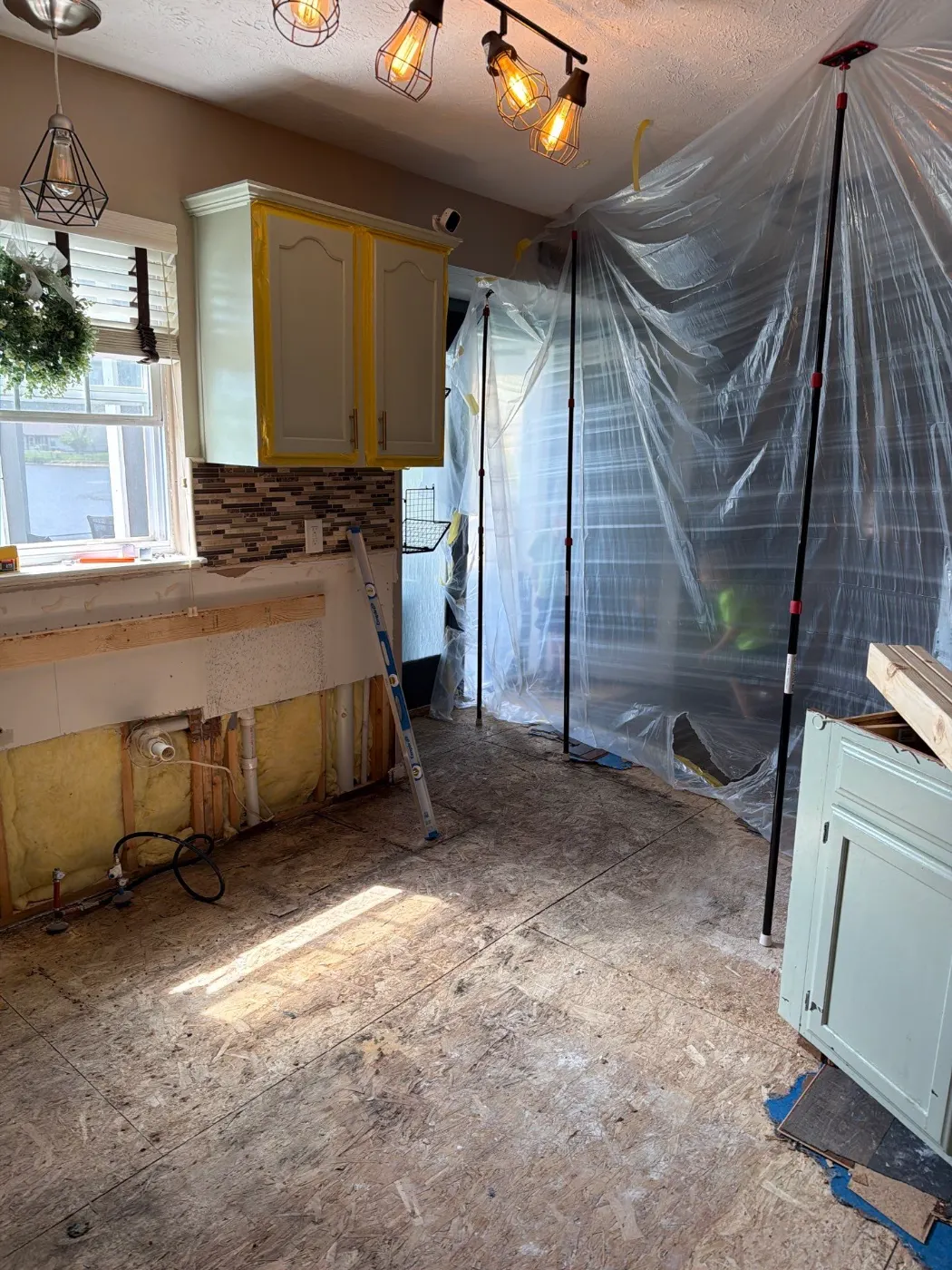
Once cleaning and any verification are complete, the crew HEPA vacuums the barrier and folds the poly inward as it comes down. Negative air machines run until the last sheet is off the framing, and the floor gets a final wipe.
Source Correction and Rebuild
The moisture source gets corrected or assigned in writing to the mechanical or roofing contractor responsible for it. Once drying readings hold, Pleasant Creek Water Restoration rebuilds what came out: framing repairs, insulation, gypsum board, ceiling grid, flooring and finishes.
Commercial Mold Remediation in Pleasant Creek
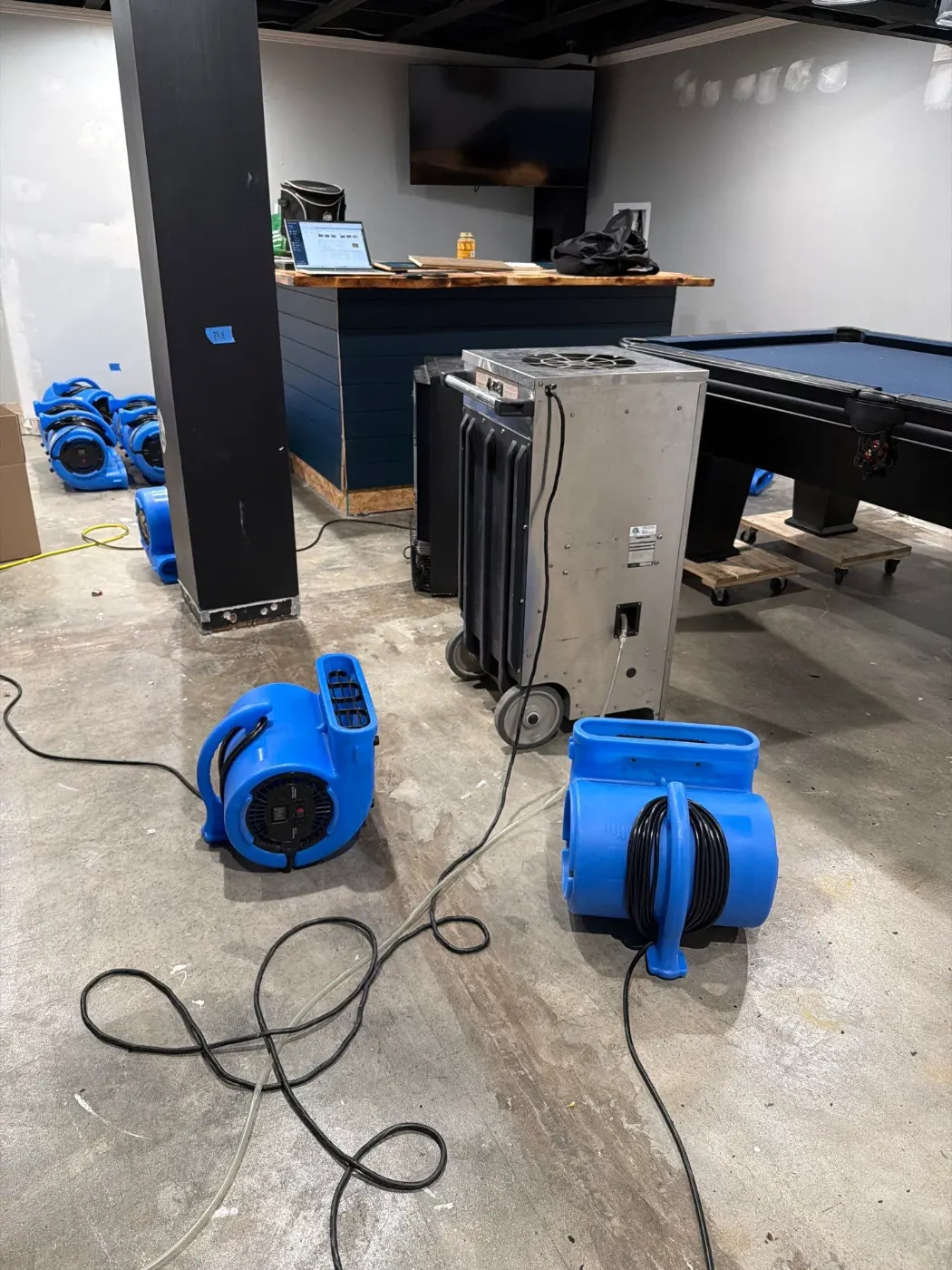
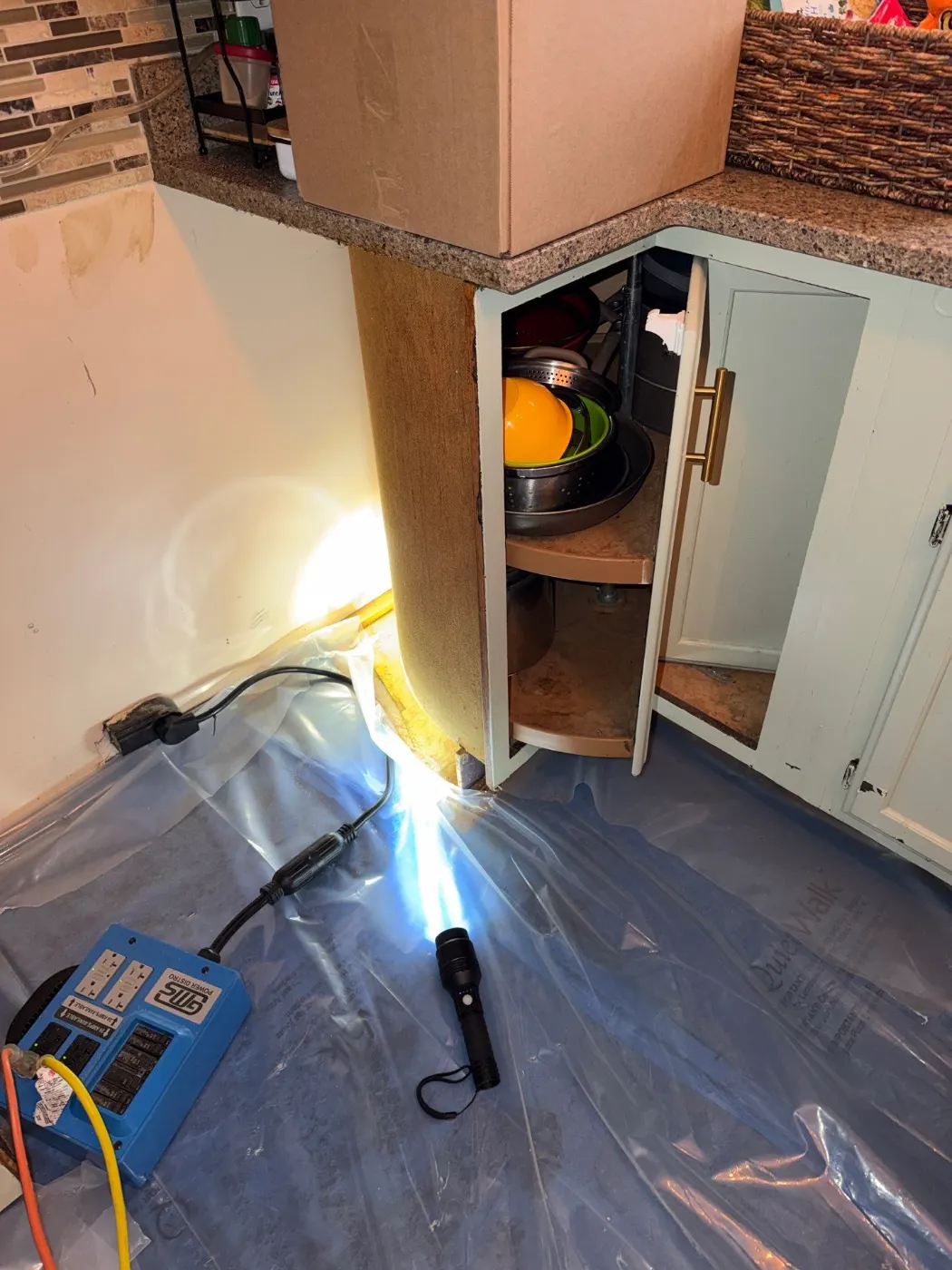
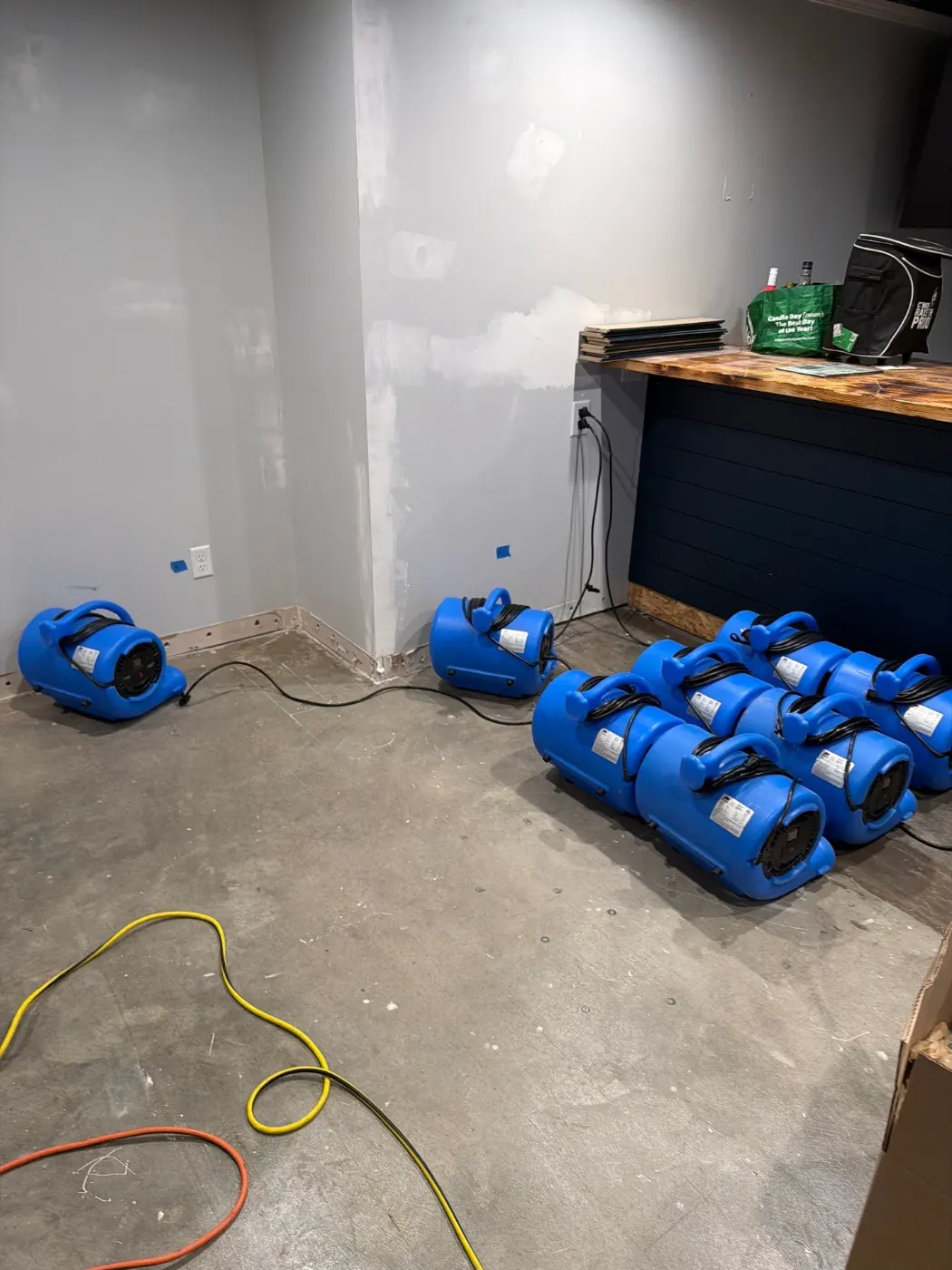
Photographs from real commercial mold remediation jobs completed by our crew in Pleasant Creek and surrounding areas.
Commercial Mold Remediation FAQ
Questions Pleasant Creek property managers ask us about commercial mold remediation.
Guidance and Standards for Commercial Mold Remediation
- The ANSI/IICRC S520 is the published standard for professional mold remediation. The current edition is the Fourth Edition, 2024. IICRC S520 Standard
- EPA’s mold guide says the key to mold control is moisture control. EPA: A Brief Guide to Mold, Moisture and Your Home
Pleasant Creek Neighborhoods We Serve
We take commercial mold remediation calls in every part of Pleasant Creek. Pick your neighborhood for local details.
Other Restoration Services in Pleasant Creek
Pleasant Creek Water Restoration handles the full scope of restoration work. Explore our other services below.
Water Damage Restoration in Pleasant Creek
24/7 emergency response. IICRC certified water restoration from extraction to full dry out.
Learn more →Basement Flooding in Pleasant Creek
Basement water emergencies handled fast. Extraction, drying, mold prevention.
Learn more →Sewage Cleanup in Pleasant Creek
Category 3 biohazard cleanup. Full containment, decontamination, structural restoration.
Learn more →Request Commercial Mold Remediation
Reach Us Directly
Our team is available 24/7 for emergencies and ready to schedule inspections during business hours.
Need Immediate Help?
For active water or mold emergencies, call us directly. We are available 24/7.